Dock levellers are the single most important piece of equipment in a loading bay. They bridge the gap between your warehouse floor and the trailer bed, so a forklift can drive straight into the vehicle without a ramp, a shunt or a lost minute. Ellickson Engineering has designed, manufactured and installed dock levellers across Ireland since 1969, from our own factory in Kilmurry, Co. Waterford.
Our dock levellers are custom made to the detail required, constructed with hydraulics to handle different trailer sizes at varying warehouse heights, and designed to the optimum health and safety standards so they integrate cleanly with the loading bay door. Whether you are fitting out a new distribution centre or replacing a twenty-year-old unit that keeps failing on a Friday afternoon, the right leveller cuts trailer turnaround times, protects your people and keeps chilled product at temperature.
Swing Lip Levellers
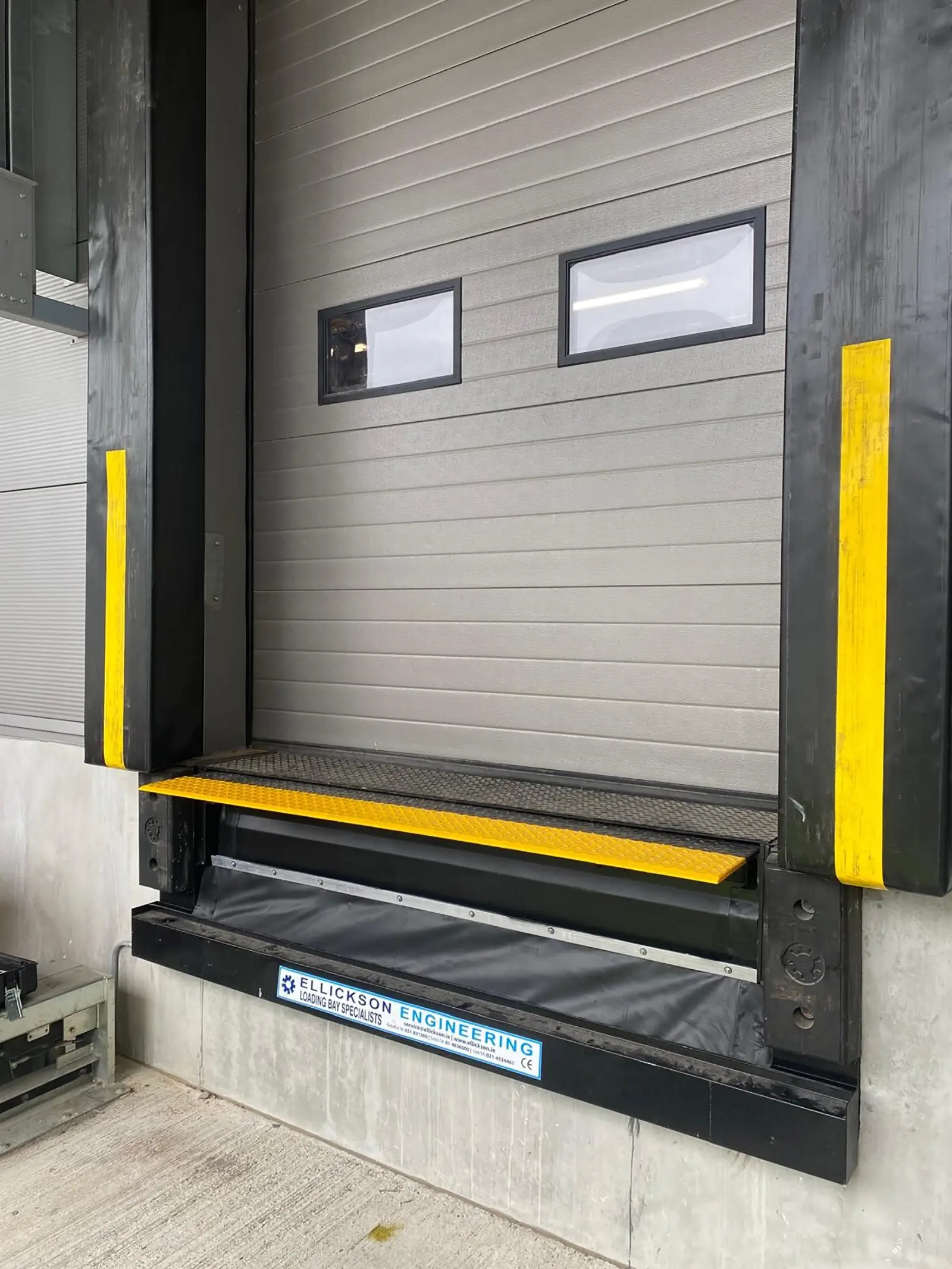
Telescopic Lip Levellers
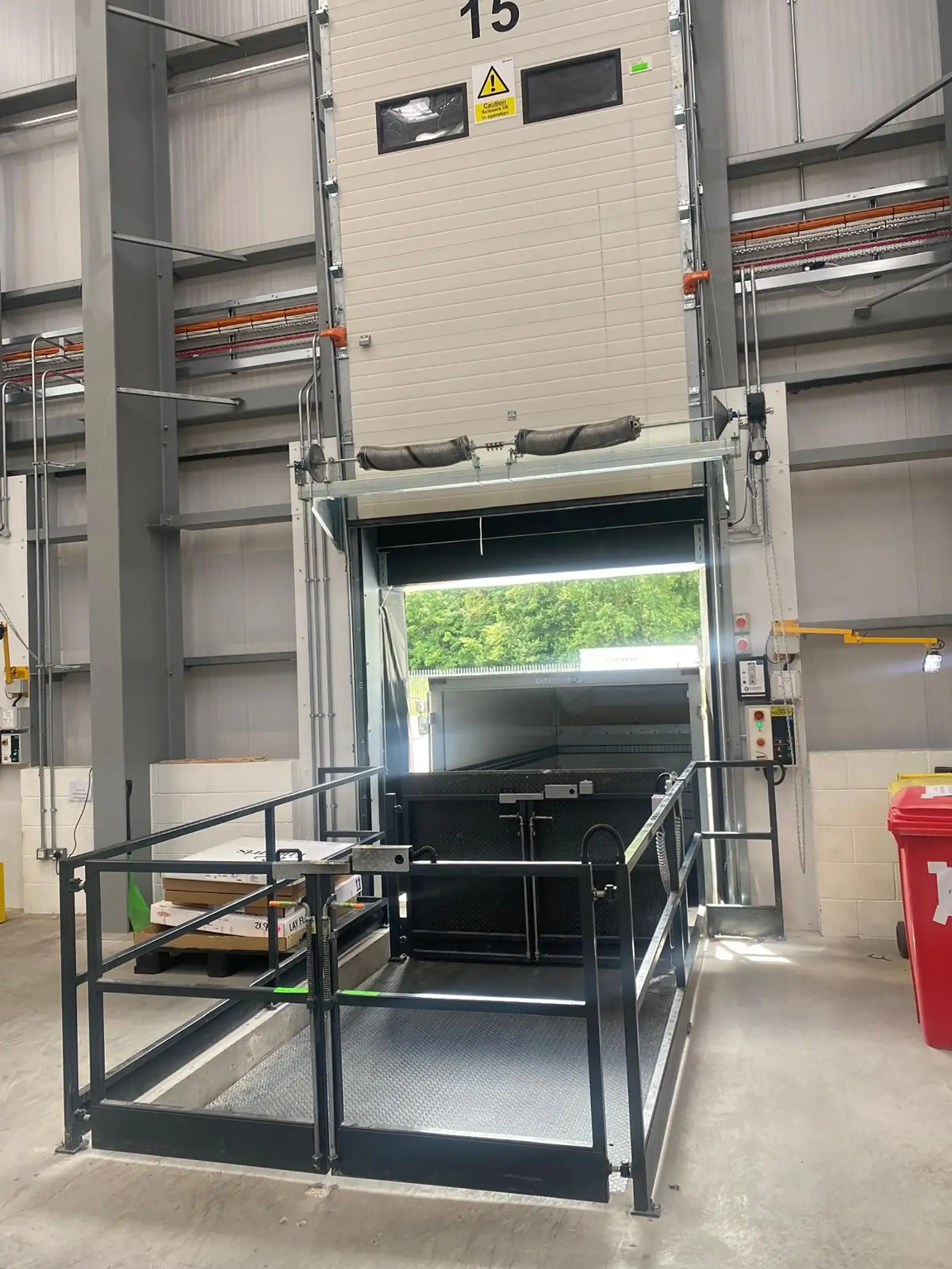
Scissor Lift Levellers
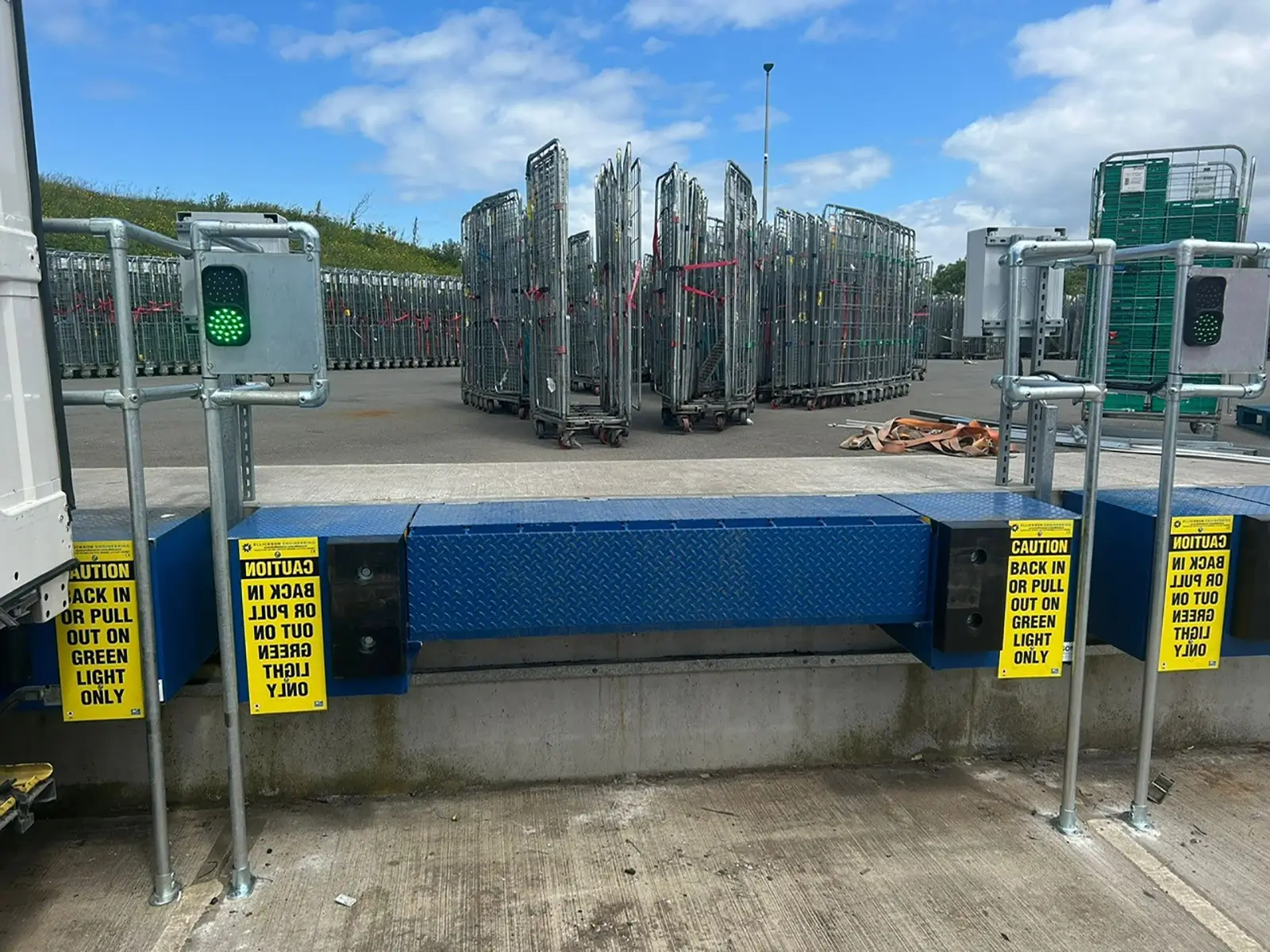
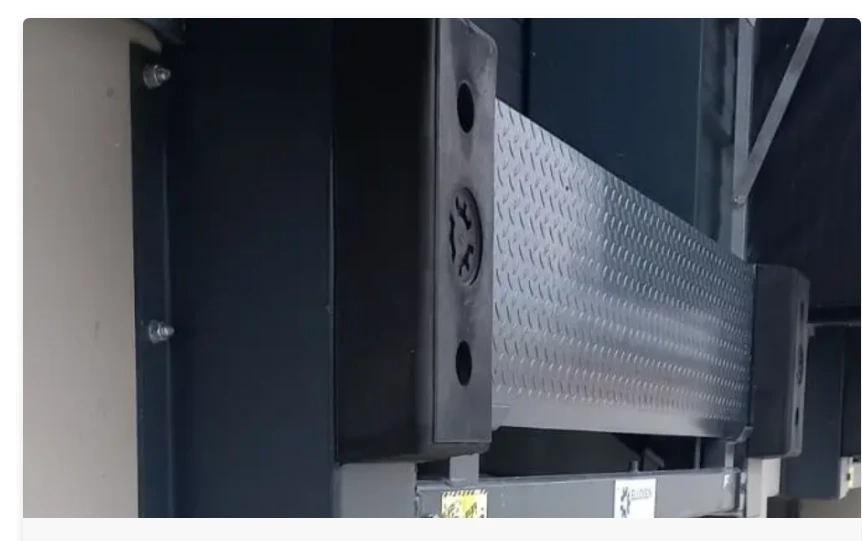
Edge of Dock Leveller-hydraulic
Dock Levellers in the Making
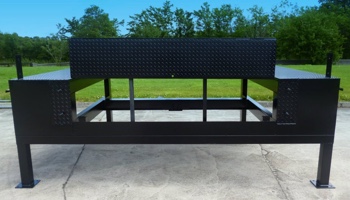
Dock Port
Loading Dock Incorporating Scissors Lift
Pit-Type Dock Levellers
Telescopic Type
Wheel Alignments Guides
What a Dock Leveller Does — and Why Your Loading Bay Needs One
A loading dock is almost never the same height as the trailer parked against it. Bed heights vary by up to 500 mm between a curtainsider, a refrigerated trailer and a rigid van. Dock levellers close that difference with a hinged steel platform and a lip that rests on the trailer floor, creating one continuous, load-rated surface.
The commercial case is simple:
- Faster turnaround. A forklift crosses a levelled bay at full speed instead of inching over a portable ramp.
- Lower damage rates. Fewer dropped pallets, fewer punctured trailer floors, fewer forklift tyre and mast repairs.
- Fewer manual-handling injuries. Operators stop lifting loads across a step.
- Protected product. Paired with a dock seal, the bay stays sealed and chilled goods stay in spec.
Without a leveller, every delivery becomes a workaround. With one, the bay becomes a predictable, measurable part of your logistics operation.
How to Specify the Right Dock Leveller for Your Site
Most specification errors we are called out to fix come down to three things.
Capacity, Working Range and Your Trailer Mix
Working range is the vertical travel above and below dock level. Capacity is the rated dynamic load, which must account for the forklift plus the heaviest pallet, not the pallet alone. Audit your actual vehicle mix over a normal week before you specify: a site that receives one low-bed trailer a fortnight still has to handle it safely.
Pit Depth, Civils and Bay Geometry
Pit-type dock levellers need a formed pit, drainage and correct reinforcement. If you are retrofitting, the pit dimensions and the position of the buffers dictate what will physically fit. Our engineers survey the bay and issue builder’s-work drawings before fabrication starts — which is where a factory of our own earns its keep, because the unit is built to the opening rather than the opening rebuilt to the unit.
Thermal Sealing and Energy Loss
An open bay is a hole in your building envelope. Dock levellers should be specified alongside dock seals and shelters and an insulated door so the cold chain and your heating bill are both protected. On chilled and pharmaceutical sites this is usually the largest single running cost the loading bay controls.
Dock Leveller Safety and Compliance in Ireland
Dock levellers are work equipment. Under Irish law they fall within the general duties of the Safety, Health and Welfare at Work Act and the associated General Application Regulations, which require work equipment to be suitable, properly installed and maintained in a safe condition. The Health and Safety Authority sets out the wider duty of care for vehicle movement, forklift operation and loading areas in its warehousing safety guidance.
The relevant product standard is BS EN 1398:2009 — Dock levellers. Safety requirements, which covers design, guarding, control systems and testing for the equipment itself. In practice, compliance on a live site rests on four things:
- A vehicle restraint or wheel lock so the trailer cannot creep or drive away during loading. Ellickson is the exclusive supplier of Rite-Hite restraint systems in the Republic of Ireland.
- Clear communication between driver and operator — usually LED traffic lights interlocked with the restraint.
- Correct edge protection and a maintained anti-slip surface.
- Documented periodic servicing, with defects recorded and closed out.
Our loading bay safety systems cover the restraint, signalling and guarding options in detail.
Installation, Servicing and 24/7 Breakdown Cover for Dock Levellers
A dock leveller that will not lift stops the bay, and a stopped bay stops the site. We install dock levellers nationwide from Waterford, Portarlington, Dublin and Cork, and we support every unit afterwards with:
- Service level agreements with transparent, scheduled maintenance and a written condition report after each visit.
- 24/7 emergency callout through our operating centres.
- Spares held in Ireland, including for units we did not originally supply.
Because we fabricate in-house, a damaged platform or a bespoke lip can be remade in our own factory rather than ordered in from abroad.
Sectors We Supply
Ellickson dock levellers are working every day in food and beverage production, pharmaceutical and medtech facilities, third-party logistics hubs, retail distribution centres and manufacturing plants — sectors where a bay is measured in vehicles per hour and a failed leveller is a documented incident.
Book a Free Loading Bay Survey
Tell us your dock heights, your vehicle mix and your throughput, and we will specify the dock leveller that fits — not the one that happens to be in stock. Free site survey, drawings and a fixed quotation.
Call Waterford 051 831 500 · Dublin 01 465 6000 · Cork 021 452 4461 — or email sales@ellickson.ie to book your free loading bay survey.
Dock Levellers: Frequently Asked Questions
How much does a dock leveller cost in Ireland?
Price depends on capacity, working range, lip type and whether a pit already exists. An edge-of-dock unit fitted to an existing dock face is the lowest-cost option because it needs no civil works, while a pit-type telescopic leveller with associated builder’s work sits at the top of the range. Ellickson provides a fixed written quotation after a free site survey, so the figure includes installation, commissioning and handover — not just the equipment.
How long do dock levellers last?
A well-specified, properly maintained pit-type leveller commonly runs for 15 to 25 years. Service life is driven far more by duty cycle and maintenance than by age: units on a high-throughput chilled bay wear hydraulics and lip hinges faster than units on a single-shift site. Scheduled servicing under a service level agreement, with hydraulics, hinges and control systems inspected and defects closed out, is what determines which end of that range you land on.
Do dock levellers need to be serviced or inspected by law in Ireland?
Dock levellers are work equipment under the Safety, Health and Welfare at Work (General Application) Regulations, so an employer must keep them suitable, properly installed and maintained in a safe condition — with maintenance carried out by a competent person and records kept. BS EN 1398:2009 sets the safety requirements for the equipment itself. In practice this means a documented periodic service schedule, not an ad-hoc call-out when something breaks.
Can a dock leveller be retrofitted to an existing loading bay?
Yes. If the dock face is sound and the trailer mix is consistent, a hydraulic edge-of-dock leveller mounts to the existing structure with no pit and minimal downtime. Where the height difference is greater or the bay handles varied vehicles, a pit can be formed retrospectively, or a self-contained Dock Port can be added outside the building envelope. An Ellickson site survey establishes which route suits the structure before any work is committed.